Bee Kind Always: A Designer’s Real-World Embroidery Review
As someone who’s stitched hundreds of designs across apparel, home goods, and boutique merchandise—and who’s rejected just as many for subtle but critical flaws—I approached Bee Kind Always with quiet curiosity. Not hype. Not hope. Just a needle-ready mindset: *Will this hold up on real fabric, in real light, for real people?*
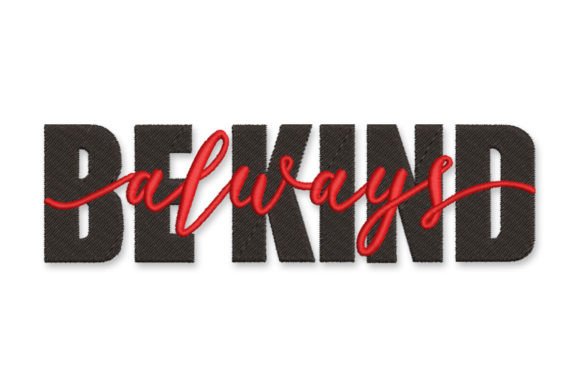
The first impression is warm, intentional, and quietly clever. It’s not cutesy overload or forced whimsy—it lands with gentle confidence. The bee motif is stylized but recognizable, wings slightly lifted, antennae curved like soft parentheses framing the phrase. “Bee Kind Always” sits cleanly beneath, with letterforms that balance legibility and charm: rounded terminals, open counters, just enough personality without sacrificing stitchability. This isn’t a shout—it’s a smile you notice mid-conversation. That tone matters deeply when you’re building brand consistency for a small shop or choosing embroidery for a nursery gift.
Where It Shines: Real Projects, Real Reactions
I tested Bee Kind Always on a natural linen tote bag—medium-weight, slightly textured, unbleached. Paired with ecru thread on oat-colored fabric, it read effortlessly: friendly, grounded, artisanal. No glare, no visual fatigue. Customers at my local craft fair paused, smiled, and asked, “Is that custom?”—a strong signal that the design feels handmade, not mass-produced.
It also translated beautifully onto a lightweight cotton baby onesie (using tear-away + light cutaway stabilizer). The curves held, the spacing between letters stayed crisp, and the bee’s wing detail remained distinct—even at 3.2 inches wide. Parents loved the warmth and positivity; the pun landed without feeling strained. For Etsy sellers or boutique owners curating mindful, nature-adjacent collections, Bee Kind Always fits naturally alongside botanical tea towels, organic cotton aprons, or embroidered baby blankets.
On a brushed cotton sweatshirt? Yes—but only with proper stabilization and reduced top tension. The fill stitch areas (especially the bee’s body) are dense enough to anchor well on stable knits, but I’d avoid it on ultra-stretchy performance fabrics unless resized and simplified. As a patch? Excellent. Clean edges, balanced satin stitch borders, and a shape that nests neatly into standard 4x4 hoops. Ideal for attaching to denim jackets, canvas pencil cases, or reusable shopping bags.
Where to Pause—Not Panic
Bee Kind Always isn’t built for micro-hoops or delicate surfaces. Avoid stitching it under 2.5 inches wide on pocket mirrors or keychains—the wing details and fine lettering begin to blur. On dark fabric, test contrast early: light yellow or honey-gold thread reads warmly, but pale cream can disappear. On thin or slippery fabrics like rayon challis or silk-blend scarves, use a firm cutaway stabilizer and slow your machine speed—dense fill areas need time to settle without puckering.
Curved surfaces—like structured caps or curved beauty cases—require careful hooping and possibly slight digitizing tweaks (if you have editing software). The bottom curve of the bee’s body and the baseline of “Always” sit flat by default, so minor distortion is likely on steep curves. For holiday gifts or wedding favors, consider pairing it with simple running-stitch vines or a single leaf motif—not as clutter, but as breathing room.
What It Adds to Your Finished Product
This design elevates perceived value without shouting. It doesn’t scream “handmade”—it whispers it, through thoughtful spacing, intentional weight distribution, and restrained detail. That subtlety builds trust: customers assume care was taken, not rushed. For craft businesses, that translates directly to willingness to pay a premium for a personalized gift or small-shop product.
Visually, Bee Kind Always supports brand cohesion—not as a logo, but as a signature accent. Use it consistently across tea towels, pillow covers, and tote bags in your shop, and buyers begin to recognize your aesthetic language. It’s versatile enough for spring markets and year-round gifting, yet specific enough to feel curated—not generic.
Practical Notes from the Hoop
- Test first. Run it on scrap fabric matching your final substrate—same weight, same stretch, same dye lot if possible.
- Check thread color contrast in both daylight and indoor lighting. What reads clearly on screen may fade on oat linen or heather grey.
- Review stitch density—especially in the bee’s thorax and the crossbar of the “A.” Overly dense fills can cause stiffness on lightweight apparel.
- Confirm hoop size compatibility. If you’re using a 4x4 hoop, verify the full design fits comfortably with seam allowance space.
- Inspect small details at actual stitch-out size: Are wing veins legible? Does the dot over the “i” stay round, or flatten?
- Mock it up in black and white before finalizing—this reveals contrast issues faster than color previews.
- Use appropriate stabilizer: Light cutaway for knits, tear-away for stable wovens, fusible for layered items like quilted pillow covers.
- Licensing matters. Confirm whether the embroidery file permits commercial use for finished products—or if resale of the digital file itself is restricted.
For embroidery designers evaluating new assets, Bee Kind Always stands out not for flash, but for fidelity: it delivers what it promises—a gentle, uplifting, stitch-worthy expression of kindness, rooted in solid digitizing and thoughtful design rhythm. It belongs in your go-to folder for custom apparel, baby embroidery, holiday embroidery, and small shop product lines where authenticity and clarity matter more than volume.
If you’re an Etsy seller building a cohesive collection around mindfulness, nature, or everyday joy—or a craft business owner selecting embroidery files that reflect your values without sacrificing polish—Bee Kind Always earns its place. Not as filler. Not as trend bait. But as a reliable, resonant, quietly confident design asset.