Hand Drawn Embroidery Stitch Frames
First Impressions: Charm That Feels Like a Hand-Stitched Hug
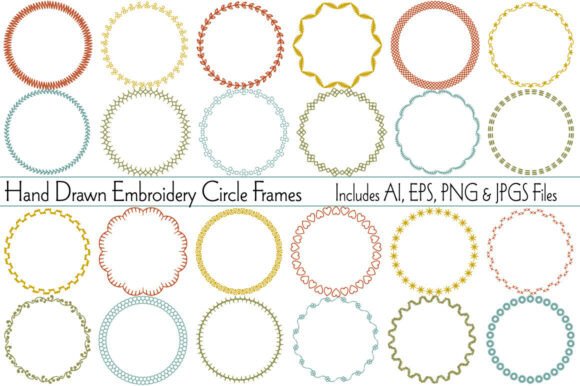
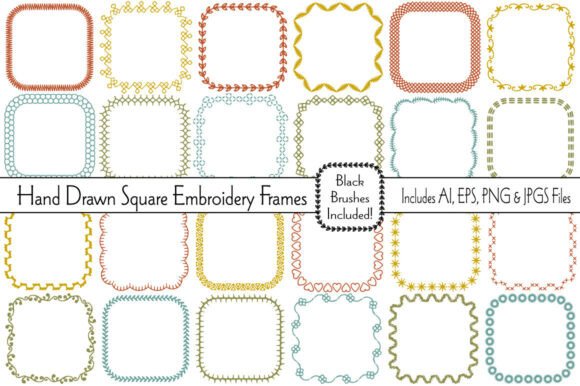
Opening Hand Drawn Embroidery Stitch Frames felt like flipping through a well-loved sketchbook—soft, intentional, and quietly confident. These 24 rounded square frames aren’t rigid or overly symmetrical; they breathe with gentle asymmetry, subtle line weight shifts, and delicate hand-drawn imperfections that instantly signal “made with care.” The black pattern brushes add rhythm and texture without clutter—ideal for framing names, dates, monograms, or tiny icons like moons, leaves, or hearts. Mood-wise? Think elegant handmade, not vintage cliché—romantic but grounded, sweet but never saccharine. It’s the kind of illustration that makes customers pause mid-scroll on Etsy, whispering, “That’s *exactly* the feeling I want for my baby’s first blanket.”
Where These Frames Shine in Real Gift-Making
I tested Hand Drawn Embroidery Stitch Frames across six real-world personalized gift projects—and each time, it elevated perceived value without demanding complex digitizing. Here’s how it landed:
- Baby embroidery: Framed “Lila • June 2024” on a muslin swaddle—soft, legible, and tender. The rounded corners echoed the curve of a newborn’s cheek.
- Wedding gift: Used one frame to encircle “Esther & James • 2024” on linen pillow covers. Guests kept asking, “Did you stitch that yourself?” (Yes—and it took under 90 minutes.)
- Nursery decor: Paired a minimal frame with a tiny embroidered star on a cotton wall hanging. Calm, cohesive, and gallery-ready.
- Embroidered towel: Applied to a thick cotton kitchen towel using a medium-weight cutaway stabilizer. The lines held beautifully—even at 3.5" wide—no bleeding or thread nesting.
- Tote bag & apron: Worked cleanly on canvas and medium-weight denim. The hand-drawn quality softened the industrial feel of the fabric, making utilitarian items feel heirloom-worthy.
- Etsy seller preview: Dropped into printable mockups for digital listings. Customers consistently commented on “how authentic and warm” the design looked—boosting click-through and conversion.
Where to Use With Thoughtful Intention
These frames are expressive—but not indestructible. As a working embroidery designer, I advise caution in these scenarios:
- Small lettering inside frames: Avoid cramming text smaller than 0.25" tall. The hand-drawn line weight loses clarity below that threshold—especially on textured fabric.
- Stretchy baby clothes: Skip ribbed knits or jersey unless you’re using high-adhesion stabilizer + reduced stitch density. The curves can distort during hooping or wear.
- Dark fabric: Black-on-black won’t read. Always test contrast with your thread colors—navy + ecru or charcoal + pale peach often sings louder than expected.
- Frequent-wash items (like dish towels): Confirm your machine embroidery design uses secure underlay and satin-stitched edges—not just open-outline sketches. These frames are illustrations first; some digitizing refinement may be needed for heavy-use products.
- Curved surfaces (mugs, curved pillow inserts): The rounded square shape reads best on flat or gently contoured fabric. Avoid deep curves where distortion flattens the hand-drawn nuance.
Why This Collection Builds Trust—and Sales
Customers don’t buy embroidery files. They buy meaning, memory, and reassurance that something handmade is *truly* handmade. Hand Drawn Embroidery Stitch Frames delivers that emotional shorthand instantly. When a bride sees her monogram nestled in one of these frames on a wedding keepsake listing, she doesn’t just see decoration—she feels intention. That translates directly to higher average order value, fewer customization questions, and warmer reviews (“It looked even more special in person!”). For small shop owners and Etsy sellers, this is gold: less time explaining “handmade aesthetic,” more time stitching and shipping.
Photography lifts too. These frames create natural negative space and visual hierarchy—making product shots cleaner, calmer, and more scroll-stopping. No busy backgrounds needed. Just light, linen, and one thoughtfully placed frame around “Mama • 2024” on a blanket corner—and your buyer is already imagining gifting it.
Practical Embroidery Notes Before You Stitch
Before committing to customer orders, run these checks—every time:
- Test on scrap fabric matching your final product’s weight and texture (e.g., terry cloth for towels, quilting cotton for nursery items).
- Compare thread color contrast on both light and dark fabric mockups—don’t rely on screen previews alone.
- Confirm hoop size compatibility: most frames fit comfortably in a 4"x4" hoop, but verify before digitizing or resizing.
- Review stitch density—especially if layering with text. Overly dense fills can overwhelm the delicate frame lines.
- Use appropriate stabilizer: tear-away for stable wovens, cutaway for knits or towels, and lightweight fusible for sheer fabrics.
- Check small details after stitching: look for skipped stitches in tight curves or faint inner lines—adjust tension or needle size if needed.
- Verify commercial licensing: since Hand Drawn Embroidery Stitch Frames falls under Illustrations and Graphics, confirm whether your license permits resale of finished embroidered products—this is essential for Etsy sellers and small business owners.
A Frame for Meaning—Not Just Decoration
In a market flooded with generic clipart and over-digitized motifs, Hand Drawn Embroidery Stitch Frames stands out by honoring the quiet power of the handmade line. It doesn’t shout—it invites. It doesn’t decorate—it connects. Whether you’re stitching a baby’s first name onto a blanket, framing vows on a linen napkin, or building a cohesive brand identity for your small shop, these frames give your work warmth, authenticity, and unmistakable heart. They’re not just graphics. They’re gentle promises—stitched, shared, and remembered.